Airbnb
Airbnb Rating: Why 4.9 Is the Real Line for Revenue
By Jillian Mood5 min read

Anywhere else, 4.7 out of 5 is a triumph. A restaurant would frame it. On Airbnb, the scale is compressed so tightly near the top that the meaningful differences live in the second decimal place.
That can sound intimidating. I find it clarifying. Once you know where the lines really are, you know what you are aiming for, and most of the path there is made of small, friendly things.
How compressed is the scale?
Airbnb's own numbers tell the story. In its Global Quality Report (February 2025), the company said that in 2024 more than four out of every five reviews were five stars, fewer than 1% were one star, and the average listing rating was over 4.75.
Now add the platform's two badges of quality:
- Superhost status requires an overall rating of 4.8 or higher.
- Guest Favorites, per that same report, carry an average rating of 4.92.
So a 4.7 listing, which any guest would enjoy, sits below the platform average. A 4.8 qualifies for Superhost. And the homes that travelers can filter for with the Guest Favorite badge cluster around 4.9 and above. That is why I call 4.9 the real line.
What the revenue data shows
AirROI, a short-term rental data company, published a 2026 analysis of ratings and revenue that included 7,203 active listings in Nashville. In that analysis, listings rated 4.9 and above earned $42,935 a year. Listings rated 4.70 to 4.79 earned $33,669, which is about 22% less. Below 4.5, the figure fell to $11,833.
A careful reading is important here. This is a correlation in one market. Homes with top ratings often have better locations, better design and more experienced hosts, and each of those lifts revenue by itself. Nobody can promise that moving from 4.78 to 4.91 will add 22% to your income.
What the pattern does suggest is that the relationship is not a gentle slope. Small differences near the top line up with large differences in earnings, which makes sense when search filters, badges and guest psychology all favor the same few tenths of a star.
The arithmetic of a small sample
Here is a hypothetical that every host should run once. Imagine a listing with 20 reviews, all five stars. One guest leaves a three-star review. The average becomes 4.9. A second three-star takes it to about 4.82.
Two takeaways. First, newer listings swing the most, so the early stays deserve extra care. Second, a single tough review is survivable. It is math, not a verdict, and the next ten happy guests will pull the average back up.
The overall score is its own question
Guests rate a stay in seven categories: overall, cleanliness, accuracy, check-in, communication, location and value. Many hosts assume the overall rating is an average of the rest. It is not. Airbnb states that the overall rating "is its own category (not an average of the other categories)."
In other words, the overall score is a feeling. A guest can give five stars in every category and still leave a four overall if something about the stay felt a little flat. The reverse happens too: a guest who felt cared for will often forgive a squeaky door.
The category scores are still your best diagnostic tool:
- Accuracy slipping? Update photos and captions so they match today's reality.
- Check-in slipping? Rewrite the arrival instructions and test them on a friend who has never visited.
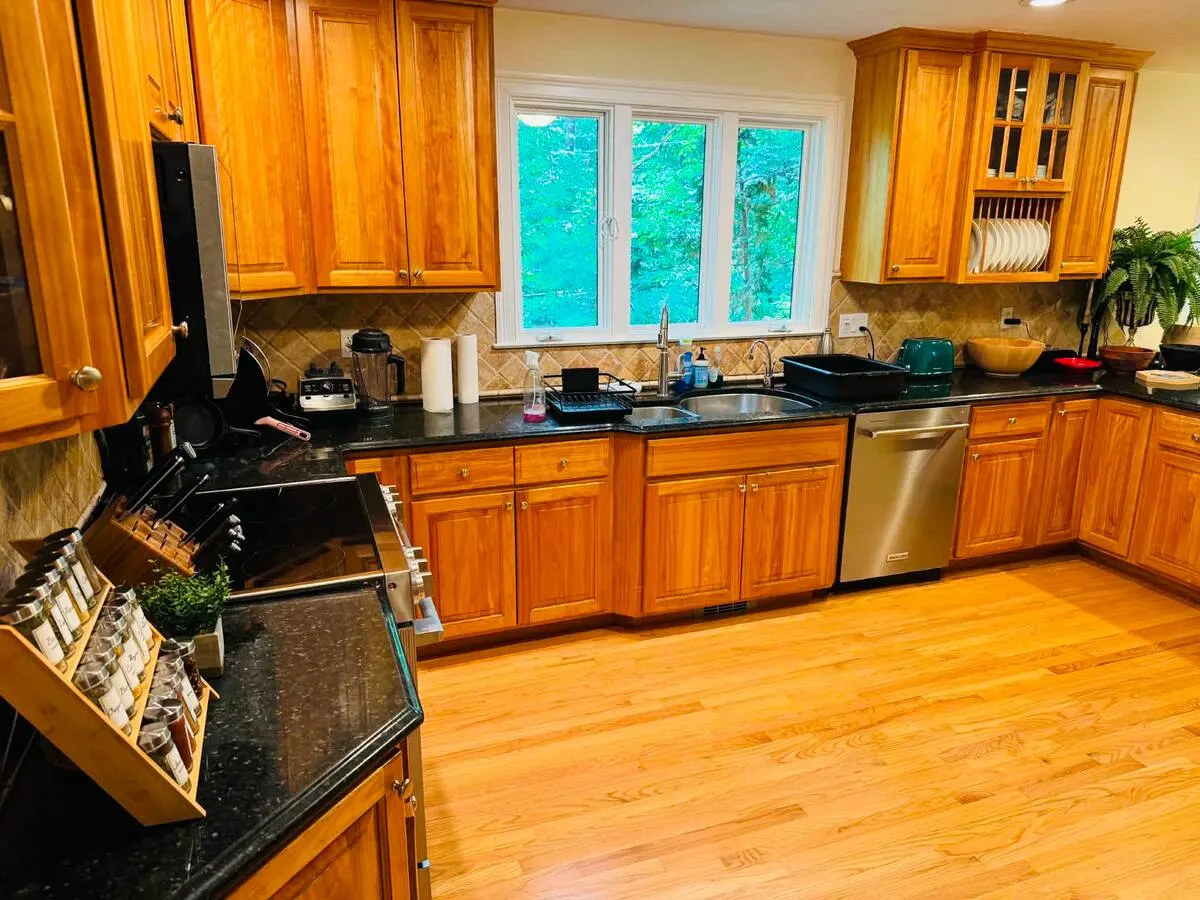
- Value slipping? You rarely need to cut the price. Add generosity: a stocked coffee station, a full spice rack, robes, a welcome note. I collect these in the spice rack theory.
- Communication slipping? Look at your response time and your mid-stay check-in message.
The Southborough home I manage is rated 4.95 from 20 reviews (September 2026). I do not think any single feature explains that. It is the sum of many details, plus answering every message fast.
Answering a tough review gracefully
Sooner or later, every host with enough stays gets a review that stings. The response matters more than the review, because future guests read both.
Airbnb's guide on how to handle a bad review recommends a simple shape: thank the guest for the feedback, share what you are improving, and keep it short and friendly. Its example is a good model: "We're sorry the beds were uncomfortable. Your sleep is important, so we've added mattress toppers." Your public response appears on the listing along with the original review.
This is where my public relations training earns its keep. A few principles I work by:
- Wait a day. Never reply while your pulse is up.
- Write for the next guest, not the last one. The reviewer has gone home. Your reader is the person deciding whether to book.
- Be specific about the fix. "We replaced the mattress" beats "we take feedback seriously."
- Skip the rebuttal. Even when you are right, arguing in public looks worse than the original complaint.
- Request removal only for real policy violations. Airbnb counts review removals when it evaluates Guest Favorite eligibility, so this is not a tool for smoothing out honest criticism.
Before the review is written
The best review strategy happens during the stay. A warm message on the first morning ("Is everything just as you hoped? Anything I can bring over?") gives guests a private channel for small problems. A fixed problem often becomes a line of praise. A problem nobody mentioned until the review is a missed chance.
If your rating is already strong, you are doing the hard part well. Getting from 4.8 to 4.9 is usually about the last few details and a steady system, and that is work I love doing alongside owners.
Sources
- Airbnb Global Quality Report, February 2025 (Airbnb Newsroom)
- Superhost requirements (Airbnb Help Center)
- Ratings for homes (Airbnb Help Center)
- How to handle a bad review (Airbnb Resource Center)
- The Airbnb rating revenue cliff, 2026 (AirROI)

Want this done for your home?
Everything in this article is part of what Jillian does for the homes she hosts. Tell her about yours and she will tell you, honestly, what she would do with it.
Talk to Jillian