Local guides
Airbnb Property Management in Greater Boston: Owner's Guide
By Jillian Mood5 min read
Greater Boston is a wonderful place to host. It is also a place where three layers of rules meet: the state, the City of Boston, and the many surrounding cities and towns that each have a say. If you get the layers straight at the start, everything after that is hospitality.
What follows is my reading of the official pages in September 2026. I am a co-host and an Airbnb Superhost, not an attorney or a tax professional, and none of this is legal or tax advice. Rules change. Confirm with the Department of Revenue, your city or town hall, and your own advisors.
Layer one: Massachusetts
Since July 1, 2019, the state's room occupancy excise applies to short-term rentals, which Massachusetts defines as rentals of 31 days or less. The Department of Revenue's room occupancy excise page lays out the structure:
- State excise: 5.7% of the rent.
- Local option excise: cities and towns may add up to 6% (up to 6.5% in Boston).
- Community impact fee: a city or town may also charge up to 3% in certain cases, for example when an operator has more than one short-term rental in that community.
- Registration: operators and intermediaries register with the DOR through MassTaxConnect, and each property receives a certificate number.
- The 14-day exemption: an owner who rents for 14 days or fewer in a calendar year can claim an exemption from the excise by filing an annual declaration with the DOR on MassTaxConnect. Go over 14 days, and tax is owed on those first days too.
The DOR also explains that an intermediary who collects the rent is responsible for collecting and remitting the tax. Check each platform's help pages to see what it remits on your behalf, and ask your tax professional about direct bookings.
One more state item is insurance. The Division of Insurance's short-term rental insurance page says operators must have at least $1,000,000 of liability coverage for each short-term rental, unless the hosting platform maintains equal or greater coverage, and it recommends confirming the details with the platform and a licensed insurance producer.
Layer two: the City of Boston
Boston has its own ordinance, administered by Inspectional Services. The city's short-term rentals page describes three eligible unit types:
- Limited Share Unit: a private bedroom in the owner-operator's primary residence, with the owner present during the stay. Fee: $25 per year.
- Home Share Unit: a whole unit at the owner-operator's primary residence. Fee: $200 per year.
- Owner-Adjacent Unit: a secondary unit in a two- or three-family building where the owner lives. Fee: $200 per year.
The common thread is owner occupancy. The city defines it as living in the property for at least nine months out of a 12-month period, and asks for proof. Boston defines a short-term rental as a stay of fewer than 28 consecutive days, requires the city registration number on every listing, and requires yearly renewal. Units with affordability restrictions, and units with certain code violation histories, are not eligible.
As I read it, an investor-owned apartment in Boston that nobody lives in does not fit any of the three categories. If that is your situation, talk to the city or an attorney first.
Layer three: every other city and town
The 2018 state law that created this framework also lets municipalities regulate short-term rentals through their own ordinances and by-laws. Around Boston, the result is real variety. Cambridge, for example, runs its own registration program through its Inspectional Services Department, with categories built around the operator's primary residence. Other communities handle the question through zoning, and the answer can differ from one town line to the next.
I will not try to summarize every town code here, because a summary would be out of date by spring Town Meeting. The reliable method:
- Search the municipal code for "short-term rental" and read the zoning by-law's use table.
- Call the building or planning department and ask what applies to your address.
- Ask whether the community has adopted the local option excise and the community impact fee.
- In a condo or HOA, read the documents. They can be stricter than the town.
What fills calendars here
Universities. Move-in, parents' weekends, reunions and, above all, graduations. Families travel in groups for commencement and want one home with a table big enough for everyone.
The Boston Marathon. The Boston Athletic Association expects 30,000 participants on Patriots' Day, with the next race set for April 19, 2027. Many runners travel with family, and the date is known a year ahead.
Hospitals and research. Longer, quieter stays, where a calm home, a real kitchen and a good workspace matter more than nightlife.
Fall. New England foliage, harvest weekends and the holidays that follow.
Each of these has its own booking window and its own sensible minimum stay, which is why I price by hand around the local calendar.
Why the suburbs suit whole homes
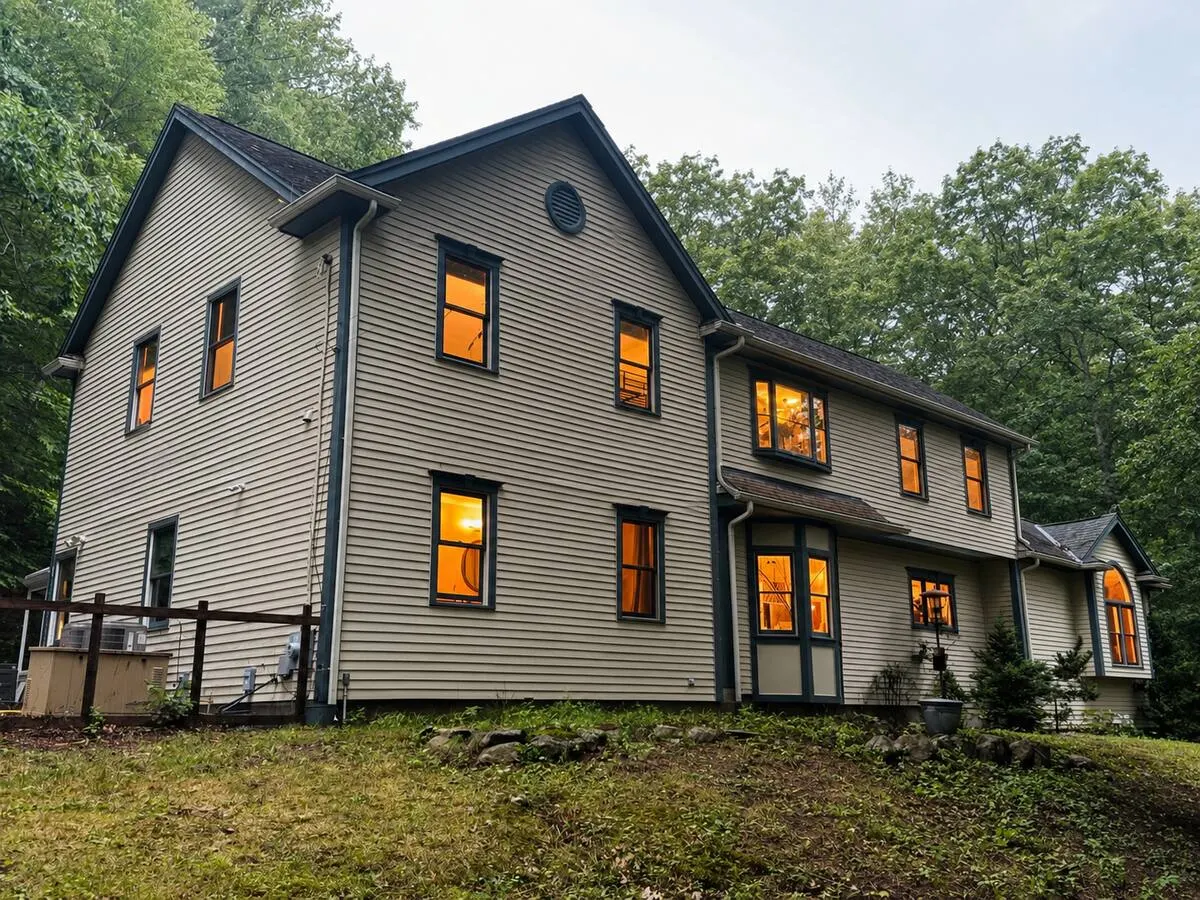
More than 80% of Airbnb bookings are group trips, according to Airbnb. Groups need bedrooms, parking and space to gather, and that is what the suburbs have. The home I host in Southborough, about 30 minutes from downtown Boston, sleeps 14 and holds Airbnb's Guest Favorite badge with a 4.95 rating from 20 reviews (September 2026). More in my guide to hosting in MetroWest.
Where I come in
Many Boston-area owners manage their own listings with great care. What a co-host adds is coverage and craft: a network of cleaners, handymen, HVAC technicians and landscapers, my own photography and listing copy, hands-on pricing, management across Airbnb, Vrbo, Booking.com and direct bookings, and replies within the hour. If you are comparing models, read co-host or property manager. To talk through your home, reach out.
Sources
- Massachusetts Department of Revenue, Room Occupancy Excise Tax (checked September 2026): https://www.mass.gov/info-details/room-occupancy-excise-tax
- Massachusetts Division of Insurance, Short-Term Rental Insurance: https://www.mass.gov/info-details/short-term-rental-insurance
- City of Boston, Inspectional Services, Short-Term Rentals (checked September 2026): https://www.boston.gov/departments/inspectional-services/short-term-rentals
- City of Cambridge, Register a Short-Term Rental: https://www.cambridgema.gov/iwantto/registerashorttermrental
- Boston Athletic Association, Boston Marathon: https://www.baa.org/races/boston-marathon
- Airbnb, 2024 Summer Release: https://news.airbnb.com/airbnb-2024-summer-release

Want this done for your home?
Everything in this article is part of what Jillian does for the homes she hosts. Tell her about yours and she will tell you, honestly, what she would do with it.
Talk to Jillian