Marketing
Getting Your Short-Term Rental Discovered by ChatGPT
By Jillian Mood6 min read
Somewhere tonight, someone planning a family reunion is typing a whole paragraph into ChatGPT: twelve people, two grandparents, one dog, within 45 minutes of Boston, a table big enough for everybody. A few seconds later they are reading a short list of places, each with a reason attached.
This is about how a home ends up on that list, and the honest limits of what anyone can promise you.
How many travellers really do this
Enough to take seriously, and the number depends on who asks and how.
- Deloitte surveyed 4,003 Americans in early April 2026 and found that 25% use generative AI to plan travel, up from 15% a year earlier. Among millennials it was 36%.
- An Allianz Partners poll run by Ipsos (2,001 US adults, March and April 2026) put it at 37% of Americans planning summer travel, as reported by Hotel Dive.
- In Canada, a Blue Cross study of more than 2,000 adults, published in December 2025, says 49% of travellers use AI to plan trips, and 70% of Gen Z (the page is in French).
Twenty-five, thirty-seven, forty-nine. These are self-reported answers to differently worded questions, so I would not lean on any single figure. The direction is the same in all of them.
One more number. Booking.com asked 37,325 people across 33 markets in 2025, and only 6% said they fully trust AI, while 42% always fact-check what it tells them. So the assistant makes the introduction, then the traveller goes looking for proof. Your website and your listings are where they look.
How an assistant builds its answer
Two ingredients. The first is memory: what the model absorbed in training from a huge snapshot of the web, often a year or more old. The second is a live web search: the assistant looks things up, reads a handful of pages, and writes a summary with links.
A single private home is unlikely to live in the memory. It gets found through the live search, which means the basics of being found on Google still matter a great deal. I cover those in SEO for short-term rentals. Google says as much about its own AI answers: there are "no additional requirements to appear in AI Overviews or AI Mode" beyond being a page it can index and show.
The trade has a name for the chatbot side of this: GEO, generative engine optimization. Think of it as SEO's younger cousin. The job is to make your home easy for a machine to read, quote and trust.
What you can do about it
Say the facts plainly
An assistant cannot quote a vibe. "A spacious retreat close to everything" gives it nothing to work with. "Sleeps 14 in four bedrooms, about 30 minutes from downtown Boston, dining table seats 12, reservoir trails across the street" gives it four facts it can match to the reunion question above.
Keep the poetry. I would never argue against a listing with personality, and I wrote about that in how to write a listing that books. Just put the plain facts right beside it, in text. Words baked into a photo or a PDF are much harder for a machine to read.
Answer the questions guests really ask
People talk to assistants in full questions, so pages that answer full questions fit well. How far is the house from the marathon start in Hopkinton? Can we hold a day retreat there? Are dogs welcome? Use the question as a heading and answer it in the first sentence.
Local guides do the same job at a larger scale. A page about graduation weekend with the real dates, or the best trails within ten minutes, answers a question a traveller was going to ask anyway. Be honest in them, including when a hotel would suit someone better.
Keep your facts identical everywhere
If Airbnb says the home sleeps 14, Vrbo says 12 and your own site says 16, a person shrugs. A machine either loses confidence or repeats the wrong number. Once a season, check the basics across every place the home appears: its name, bedrooms, guest count, town, pet policy, check-in time.
Be mentioned by other people
A research preprint from September 2025 (Chen, Wang, Chen and Koudas) compared AI search with Google and found "a systematic and overwhelming bias towards Earned media", meaning independent third-party sources, over a brand's own pages. It is a preprint, so treat it as a hint.
For a rental, earned mentions look like the regional tourism office, a wedding venue's "where to stay" page, the chamber of commerce, a retreat leader's blog, a local reporter. This is old-fashioned public relations, which happens to be part of my background.
Leave the door open for their crawlers
A crawler is the program that reads your pages on an assistant's behalf. A small file on your site, called robots.txt, tells crawlers where they may go. Some hosting and security services now put that decision in front of site owners: Cloudflare, for one, announced in July 2025 that every new domain is asked whether to allow AI crawlers. It is easy to click "block" without knowing what that switches off.
The companies document this openly:
- OpenAI uses a crawler called OAI-SearchBot for search, and states that sites opted out of it "will not be shown in ChatGPT search answers". A different crawler, GPTBot, collects training material. You can welcome one and refuse the other.
- Anthropic says blocking Claude-SearchBot or Claude-User "may reduce your site's visibility" when people search through Claude.
- Perplexity recommends allowing PerplexityBot and says it is not used for training.
- Google's Google-Extended setting governs Gemini training and grounding, and it "does not impact a site's inclusion in Google Search".
You do not need to touch any of it yourself. Ask whoever looks after your site one question: are we blocking any AI search crawlers? Saying no to training is a fair choice, and by these companies' own documentation it does not remove you from search answers.
Structured data, as a helper
Structured data is a set of invisible labels in a page that say "this is a lodging business, here are its amenities, here is the check-in time". Google says it uses structured data "to understand the content of the page". Google also says no special markup is needed for its AI features, and I have not seen any AI company document that its assistant reads these labels. I treat it as cheap insurance, not a strategy.
What this looks like on a real site
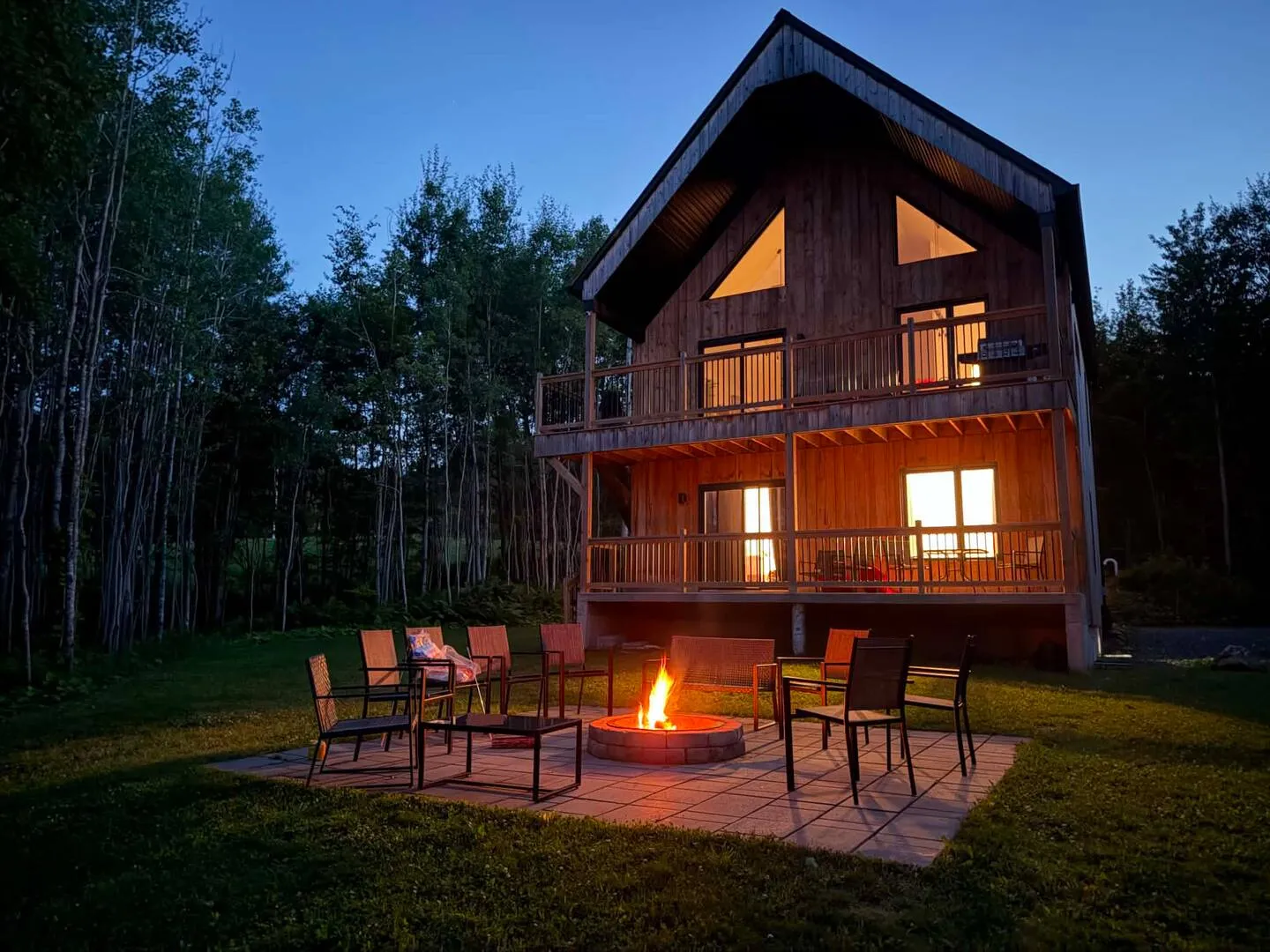
In September 2026 I built southboroughgardenretreat.com for the Southborough home along these lines. Every page arrives as finished HTML, so nothing depends on a robot running scripts. The home page carries structured data describing a lodging business with its amenities and check-in times. There are 15 local guides, and every attraction in them is verified and linked to its official site. The location stays at town level, because this is a private home. The full build is in building a short-term rental website, and the booking software behind it is in my Lodgify review.
The site is days old. It is too early to show numbers, and I will not pretend otherwise. What I can show you is the method.
What nobody can promise
Ask an assistant the same question twice and you may get two different lists. No AI company publishes how it chooses. The best research is young: a study presented at the KDD 2024 conference found that adding sources, quotations and statistics lifted a page's visibility by 30 to 40% in its benchmark, while keyword stuffing did close to nothing. That was a lab test, not rental homes. I still find it encouraging, because what worked was substance.
So anyone guaranteeing you a ranking in ChatGPT is overselling. The honest version is a routine. Once a month, ask three or four assistants the questions your guests would ask. Note whether your home appears and which facts come out wrong, then fix them at the source. Watch your analytics for visits arriving from the assistants, the same way you watch the other numbers that matter.
Writing the facts, the guides and the site so that both people and machines can read them is part of the work I do for owners.
Sources
- Deloitte, 2026 Summer Travel Survey press release (May 19, 2026): https://www.deloitte.com/us/en/about/press-room/deloitte-as-rising-costs-slow-summer-travel-to-six-year-low-travelers-plan-to-spend-more.html
- Hotel Dive on the Allianz Partners and Ipsos poll (July 23, 2026): https://www.hoteldive.com/news/artificial-intelligence-mainstream-travel-planning-tool/826002/
- Blue Cross Canada, 2026 Travel Intentions Study (December 2025, in French): https://www.bluecross.ca/fr/etude-croix-bleue-2026/
- Booking.com, Global AI Sentiment Report (July 23, 2025): https://news.booking.com/bookingcom-releases-the-global-ai-sentiment-report/
- Google Search Central, AI features and your website: https://developers.google.com/search/docs/appearance/ai-features
- Google, common crawlers (Google-Extended): https://developers.google.com/crawling/docs/crawlers-fetchers/google-common-crawlers
- Google Search Central, introduction to structured data: https://developers.google.com/search/docs/appearance/structured-data/intro-structured-data
- OpenAI, overview of OpenAI crawlers: https://developers.openai.com/api/docs/bots
- Anthropic, how site owners can allow or block its crawlers: https://support.claude.com/en/articles/8896518-does-anthropic-crawl-data-from-the-web-and-how-can-site-owners-block-the-crawler
- Perplexity, crawler documentation: https://docs.perplexity.ai/docs/resources/perplexity-crawlers
- Cloudflare press release on AI crawler permissions (July 1, 2025): https://www.cloudflare.com/press/press-releases/2025/cloudflare-just-changed-how-ai-crawlers-scrape-the-internet-at-large/
- Aggarwal et al., "GEO: Generative Engine Optimization" (KDD 2024): https://arxiv.org/abs/2311.09735
- Chen, Wang, Chen and Koudas, "Generative Engine Optimization: How to Dominate AI Search" (preprint, September 2025): https://arxiv.org/abs/2509.08919

Want this done for your home?
Everything in this article is part of what Jillian does for the homes she hosts. Tell her about yours and she will tell you, honestly, what she would do with it.
Talk to Jillian