Marketing
SEO for Short-Term Rentals: How Guests Find Your Home
By Jillian Mood6 min read
Nobody types "four bedroom short-term rental with thoughtful hospitality" into Google. They type "where to stay near Hopkinton for the marathon" or "house for 12 near Boston graduation". SEO, short for search engine optimization, is the quiet craft of being the page that answers that search.
Here is how I approach it for a single home, leaning on Google's own published advice. If the site does not exist yet, start with my guide to building a short-term rental website and come back.
What SEO is, in plain words
Google reads pages all day and tries to show each searcher the most useful one. Your side of the bargain: write useful pages, and make them easy to read, for people and for Google.
Google puts the weight on the first half. Its SEO Starter Guide says that content people find "compelling and useful will likely influence your website's presence in search results more than any of the other suggestions in this guide." Good news for a host who knows her area.
How travellers actually search
Expedia Group's Path to Purchase research with Luth Research found that travellers view, on average, 141 pages of travel content in the 45 days before booking. Your site only has to be a good one among them.
The searches I write for fall into three families:
- A place. "Where to stay near Framingham." "Chalet near Lac Lyster."
- A group. "Large group rental near Boston." "House that sleeps 14 in MetroWest."
- An occasion. Marathon weekend, a graduation, a wedding where the hotel block is full, a team off-site, fall colours.
Notice what is missing: "Boston vacation rental". Airbnb and Vrbo own that search, and they can have it. The specific searches are smaller, and the people typing them are exactly who a whole home suits.
Why local guide pages work
A page titled "Where to Stay for the Boston Marathon Start in Hopkinton" answers what a runner's family is really wondering: how race morning works, how to get back from the finish, where to watch from. A house a few miles from the start belongs in that answer.
The site Mood en Scène built for the Southborough home has 15 guides like this: graduations with real dates, wedding guests, corporate off-sites, fall foliage, winter weekends, town guides, a trails guide led by the Sudbury Reservoir Trail, a garden lovers' weekend. The site is days old, so there are no ranking results to report and I will not guess at them. What I can share is our rules:
- Every attraction is verified and linked on its own official site.
- Dates are real and checked, not "every spring".
- The advice is honest, including when a hotel is the better choice. Our marathon guide tells solo runners to book near Copley instead. A guide that only ever recommends your own house reads like an ad, and people can tell.
Google's guidance on helpful, people-first content suggests asking: "Does the content clearly demonstrate first-hand expertise and a depth of knowledge?" You have walked the trail and eaten at the diner. That counts.
The same page lists, as a warning sign, producing lots of content on many topics in the hope that some of it ranks. Fifteen guides about places you know beat 150 about places you have never been. For the kind of local detail I mean, see my pieces on MetroWest and the Eastern Townships.
Honest titles and descriptions
Every page has a title (the blue link in Google's results) and a description (the two grey lines under it). The Starter Guide says a good title is "unique to the page, clear and concise, and accurately describes the contents of the page", and a good description is "short, unique to one particular page, and includes the most relevant points."
A made-up example: "Graduation Weekend near Worcester: Where Families Stay", not "Home | Luxury Rental | Best Rental | Book Now". Google calls the second style keyword stuffing and says it is against its spam policies. It also says that it does not use the keywords meta tag, so you can leave that box empty.
Same muscle as a listing title, which I cover in how to write an Airbnb listing that books.
Fast pages
Google says its ranking systems reward a good page experience, including how quickly a page loads and how well it works on a phone. It is equally clear that relevance comes first. Speed will not rescue a thin page.
For the Southborough site we kept it light: fonts and images are served from the site itself, and there are no third-party trackers, which also means no cookie banner covering the first photo. My test is low-tech: open the site on your phone, on cellular, standing in the driveway. If you get bored waiting, so will a guest.
Real photos, with descriptions
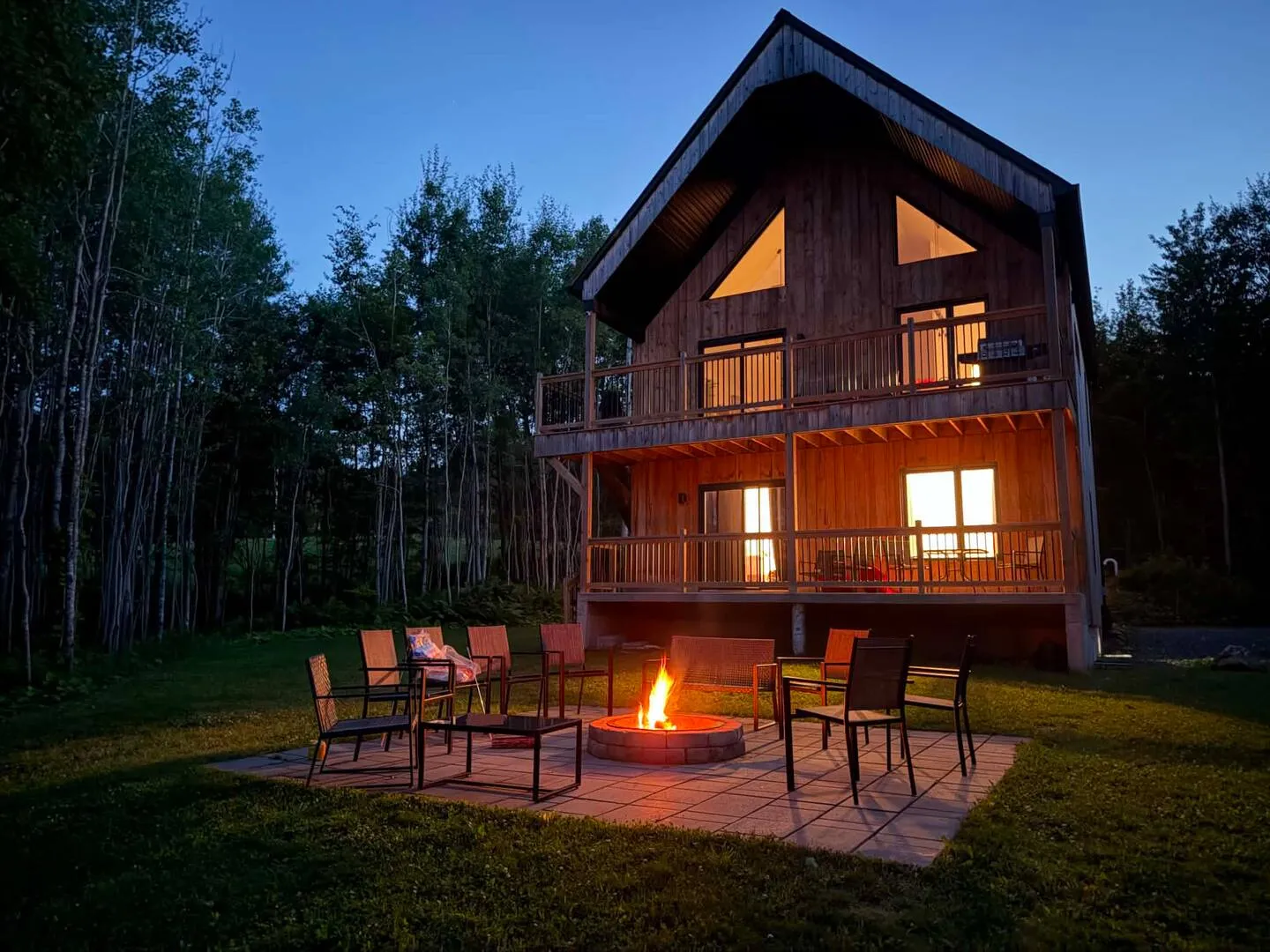
Google cannot admire a twilight exterior the way a guest does. It leans on the words around a photo to understand it. Its image guidance recommends descriptive alt text (the short description attached to each photo, which screen readers also read aloud) and descriptive file names. Google's example is that my-new-black-kitten.jpg beats IMG00023.JPG.
Describe what is truly in the frame, for Google and for visitors who cannot see the photo. More on the photos themselves in photography that sells the feeling.
Google Business Profile: read the rules first
You will often be told to claim a Google Business Profile, the box with a map, hours and reviews. First read Google's eligibility guidelines, which I checked in September 2026. A business "must make in-person contact with customers during its stated hours", and the list of ineligible businesses includes "rental or for-sale properties such as vacation homes, model homes, or vacant apartments." Sales or leasing offices are eligible.
So a private vacation home, on its own, does not qualify. A management company with a staffed office may. Rules change, so read the page yourself first.
The same goes for the special vacation rental listings you may have seen in Google's results. Google says that feature is for sites already connected to its Hotel Center through a Google account manager. As I read it, that means large platforms and their partners. A single-home site can still use general structured data, a behind-the-scenes label that describes the home as a lodging business with its amenities and check-in times. We did that on the Southborough home page. Google says plainly that structured data guarantees nothing, so treat it as a helper.
Reviews, and links from neighbours
Reviews live where guests wrote them. The Southborough home's 4.95 rating sits on Airbnb, so the website links straight to the listing for anyone to check.
Links to your site from other sites help Google find you and, to a degree, trust you. Buying them is out: Google's spam policies name "exchanging money for links" as link spam. Earn them nearby instead: the chamber of commerce, the regional tourism office, the wedding venue whose guests need beds, the yoga teacher who holds a day retreat in your garden.
Patience, and what comes next
Google says some changes take effect within hours and others "could take several months." On its page about hiring SEO help it adds: "No one can guarantee a #1 ranking on Google." Anyone promising otherwise gets a polite no from me.
The same specific pages are what AI assistants read too, which I cover in getting a rental discovered by ChatGPT. And your software decides how much of this you control, so check that it lets you edit every page's title, description and photo text. My notes on the tool I use are in my Lodgify review.
Writing the guides, checking every date and describing every photo is slow, happy work. It is part of what I do for owners.
Sources
- Google Search Central, SEO Starter Guide: https://developers.google.com/search/docs/fundamentals/seo-starter-guide
- Google Search Central, Creating helpful content: https://developers.google.com/search/docs/fundamentals/creating-helpful-content
- Google Search Central, Page experience: https://developers.google.com/search/docs/appearance/page-experience
- Google Search Central, Image SEO: https://developers.google.com/search/docs/appearance/google-images
- Google Search Central, Vacation rental structured data: https://developers.google.com/search/docs/appearance/structured-data/vacation-rental
- Google Search Central, Spam policies: https://developers.google.com/search/docs/essentials/spam-policies
- Google Search Central, Do you need an SEO?: https://developers.google.com/search/docs/fundamentals/do-i-need-seo
- Google Business Profile Help, Business eligibility guidelines: https://support.google.com/business/answer/13763036?hl=en
- Expedia Group, Traveler Path to Purchase: https://partner.expediagroup.com/en-us/resources/blog/path-to-purchase-insights

Want this done for your home?
Everything in this article is part of what Jillian does for the homes she hosts. Tell her about yours and she will tell you, honestly, what she would do with it.
Talk to Jillian