Revenue
Airbnb vs Vrbo, Booking.com, Google and Direct Booking Compared
By Jillian Mood8 min read
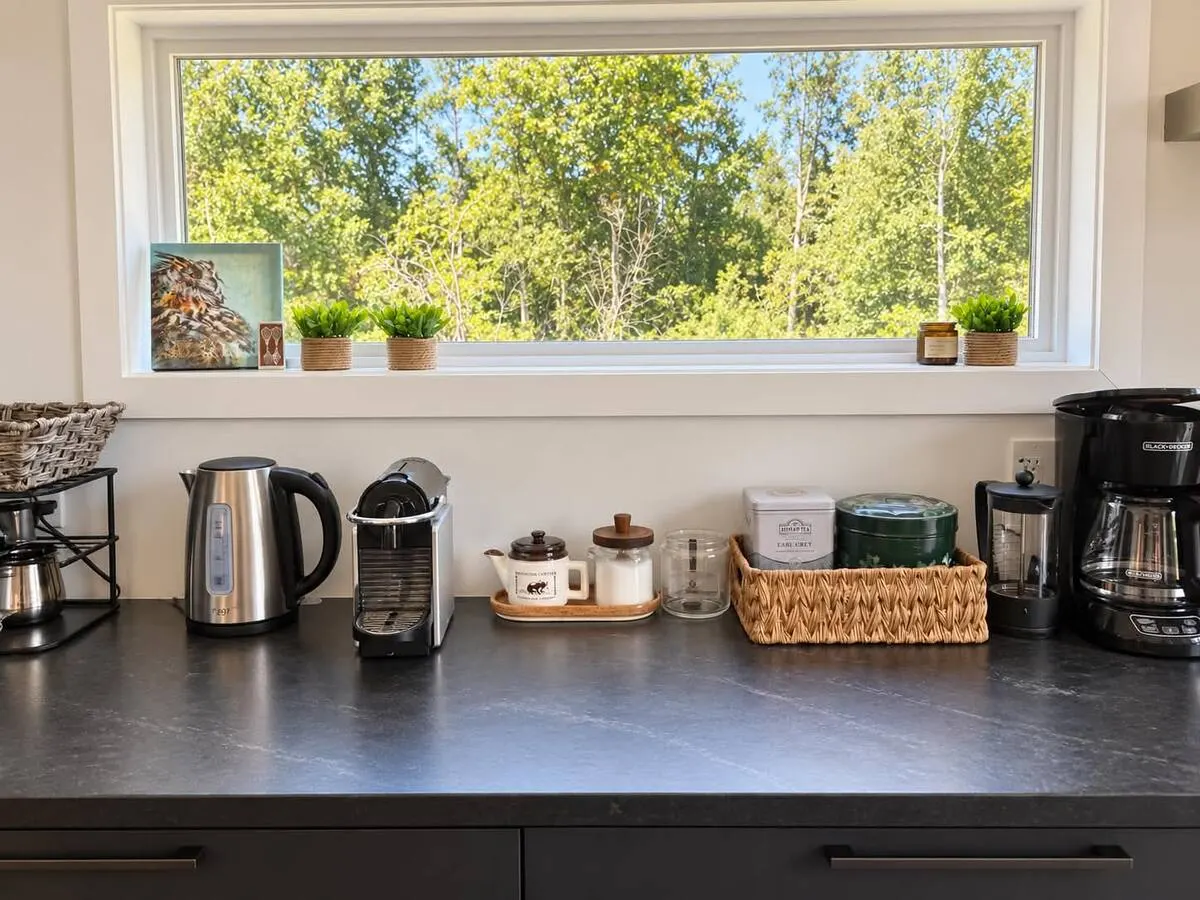
Every booking channel is a different front door to the same house. The guest who finds you on Airbnb, the family comparing you on Vrbo, the couple from Lyon on Booking.com, the friend of a past guest typing your name into Google: they all walk into the same kitchen and deserve the same coffee. Here is how the doors compare, what each costs, and the order in which we open them.
The five doors
Airbnb
Who books there: the widest audience of the five, and heavily group travel. Airbnb said in its 2024 Summer Release that more than 80% of its bookings are group trips, exactly the trip a five-bedroom home in the Eastern Townships or a 14-sleeper in Southborough is built for.
Fees: Airbnb has moved to a single host-paid fee. Its service fees page (checked September 22, 2026) says most hosts pay 15.5% of the booking subtotal, some 14% to 16%, and 16% in Brazil and Mexico. The old split fee (3% host, 14.1% to 16.5% guest) is being phased out; Airbnb's Resource Center note, updated August 24, 2026, sets the deadlines to adjust prices at September 15 outside the European Economic Area and October 13 inside it. Hosts who price through property management software were moved first, so a home run through Lodgify is already there. The guest sees the price you set, with no Airbnb line at checkout.
Payment and protection: Airbnb collects and pays you out. AirCover for Hosts lists US$3M damage protection and US$1M liability insurance, plus guest identity verification and a 24-hour safety line. Airbnb says it is no substitute for your own insurance; neither do I.
Cancellation control: Flexible, Moderate, Limited (full refund up to 14 days out, added October 1, 2025) or Firm; Strict tiers are by invitation. A 24-hour grace period after booking applies to all standard policies, and host cancellations are policed hard.
Reviews: two-sided and blind, with 14 days after checkout for each side; five reviews open the door to Guest Favorite. Our Guest Favorite guide covers the rest.
Verdict: the largest audience, the most useful badge, the strictest referee. It is also where an hour-late reply costs the most, which is why on-the-hour answers are a pillar of The Mood Method.
Vrbo
Who books there: families and groups renting whole homes. Vrbo's own host page describes its guests as families making memories and longer-stay travellers, and claims they spend more and stay longer than travellers elsewhere (Vrbo's claim, not independent).
Fees: on pay-per-booking, Vrbo's fee page (checked September 22, 2026) lists a 5% commission on the rental amount and your fees, plus 3% payment processing on the whole payment including taxes and deposits. Software-connected hosts pay a 5% booking fee (12% to 15% in Europe, Australia and New Zealand). The traveller service fee is real but its percentage is not published.
Payment and protection: Vrbo processes payment and provides US$1M liability insurance for stays booked through its checkout. For damage, you can require guests to buy Property Damage Protection or set a deposit.
Cancellation control: seven options, from Day-before to No refund, more granular than Airbnb.
Reviews: a separate history. Your Airbnb stars do not show here; the first Vrbo review starts from zero.
Verdict: the natural second channel for a large whole home in North America. Its audience overlaps with Airbnb's, so it adds reach more than a different kind of guest.
Booking.com
Who books there: hotel-habituated travellers and, above all, Europeans. The guest expects instant confirmation, a 1-to-10 score and a hotel-style cancellation window.
Fees: commission, percentage not published. Booking.com's commission page (checked September 22, 2026) says the rate "depends on your country, property type, and the accommodation agreement you signed," charged on the room rate plus fees such as cleaning once the guest checks out, and on no-shows and cancellations where you keep a fee.
Payment and protection: Partner Liability Insurance covers home-like properties up to US$1M outside Europe and the UK, at no charge. For damage to your own property, hosts outside the US choose a damage deposit or a damage programme Booking.com facilitates; US hosts are enrolled in Host Property Insurance automatically.
Cancellation control: set per rate plan; non-refundable rates are normal here.
Reviews: one-sided. Guests have 90 days to score you from 1 to 10, the score averages three years weighted toward recent stays, and you do not review them back.
Verdict: the door to Europe and to the traveller who would otherwise have booked a hotel.
Vacation rentals on Google
There is no standalone "Google Vacation Rentals" product; the feature lives inside Google's lodging search and was live on September 22, 2026. Google's Hotel Center help says listings appear alongside organic results in Search, in Maps and in Google Travel's vacation rental filter, with free booking links to your own website: "there are no fees for Google-generated referrals or bookings."
How you get on it: through a connectivity partner. The starter guide admits registered property management businesses with a direct booking website, or properties already on an integrated booking site; shared rooms, partial houses and peer-to-peer rentals are not eligible. Lodgify is on Google's partner list with Hostaway, Guesty and OwnerRez, so the practical route is to build the direct site in your software, then switch the Google channel on under your software's own rules.
Verdict: a zero-commission feed pointing Google's audience at your direct site, and only as good as the website it lands on.
Your own direct-booking website
Who books there: repeat guests, friends of past guests, people planning a gathering, and anyone who searched your home by name after seeing it elsewhere. Fees: your software subscription and card processing, nothing per booking. Protection: your own insurance and your own terms, the freedom and the responsibility in one. Cancellation and calendar: entirely yours. Reviews: you display the ones earned elsewhere. We wrote up why and how to build one.
Verdict: the best rate for the guest, the fullest relationship for you, and the slowest to start, because nobody browses the website of a home with no reputation yet.
The comparison, checked September 22, 2026
| Channel | Who books there | Fees (host and guest) | Payment, protection and cancellation | Best for |
|---|---|---|---|---|
| Airbnb | Widest audience; 80%+ of bookings are group trips (Airbnb, 2024) | Host: single fee, most hosts 15.5% of subtotal (14% to 16% for some; 16% Brazil and Mexico). Guest: none under the single fee (split fee of 14.1% to 16.5% being phased out). | Airbnb collects and pays out; AirCover: US$3M damage, US$1M liability. Cancellation: flexible, Moderate, Limited (14 days), Firm; Strict by invitation; 24-hour grace period. | Launching, earning reviews, Guest Favorite |
| Vrbo | Families and groups renting whole homes | Host: pay-per-booking, 5% commission + 3% processing; software-connected: 5% (12% to 15% in Europe, Australia, NZ). Guest: charged, percentage not published. | Vrbo processes; US$1M liability insurance; damage via guest-bought protection or deposit. Cancellation: seven policies, Day-before to No refund. | Second channel for large North American whole homes |
| Booking.com | Hotel-habituated and European travellers | Host: commission, not published (varies by country, property type, agreement). Guest: none listed on partner help pages. | Optional Payments by Booking.com; liability up to US$1M; damage deposit or damage programme (Host Property Insurance in the US). Cancellation: per rate plan, incl. non-refundable. | Europe, international guests, city stays |
| Vacation rentals on Google | People searching Google, Maps and Google Travel | Host: none. Guest: none (guest books on your site). | Your own site's checkout and insurance. Cancellation: yours. | Feeding a direct site at zero commission |
| Direct site | Repeat guests, referrals, gatherings | Host: software subscription + card processing. Guest: none unless you add one. | Your processor, your insurance, your terms. Cancellation: entirely yours. | Best rate, owned relationship, long game |
Running five doors from one desk
The only sane way to keep five calendars honest is to keep one. In Lodgify, the channel manager holds a single calendar synced across Airbnb, Vrbo, Booking.com and the direct site, so a night sold on one channel closes everywhere else and double bookings stop being something you prevent by hand. Rates go out from one place, which is where the pricing work lives. Messages from every channel land in one inbox, which is how an hour-or-less reply stays realistic across four listings. And Lodgify's public API is what lets southboroughgardenretreat.com show live availability and nightly prices from that same calendar, with a "Request to book direct" path into Lodgify's checkout and Airbnb and Vrbo buttons beside it.
The software handles the plumbing. The standard is the human part, and it is the same on every channel: identical facts and photos everywhere the home appears (a guest who sees "sleeps 12" on Vrbo and "sleeps 14" on Airbnb trusts neither), on-the-hour answers whichever inbox the question came through, and one level of care whether the guest arrived by Booking.com or by a friend's text. The guest should never be able to tell which door they used.
A channel manager keeps the calendars from lying to each other. The Mood Method keeps the house from lying to the guest.
Our rollout: Airbnb first, then the rest
Our thesis: launch a new home on Airbnb alone, earn reviews and a strong rating there (and, in time, Guest Favorite), then add Vrbo, Booking.com and direct. Two reasons. A new listing with zero reviews on three platforms splits its first guests three ways and starts three review histories from nothing, when one concentrated history is what earns badges and search placement. And Airbnb tends to send the most bookings in our markets anyway, so it is the door to perfect first.
I went looking for evidence that could contradict this. Here is what it shows.
Globally, the picture is less lopsided than hosts assume. Skift Research's March 2025 analysis put 2024 global short-term rental revenue share at 44% Airbnb, 18% Booking.com and 9% Vrbo, with Booking.com the fastest gainer since 2022. The filings agree: Airbnb reported 533.0 million nights and seats booked for 2025, while Booking Holdings said on its Q4 2025 call that alternative accommodations were about 36% of more than 1.2 billion room nights. Different units, and Booking's figure includes aparthotels, so read it as directional: Booking.com is a serious second force worldwide. Expedia's 2025 10-K lists about 2.4 million bookable alternative accommodations on Vrbo and does not break out Vrbo bookings at all.
By region, the split is sharp. Key Data figures for professionally managed rentals, reported by Rental Scale-Up in December 2024, put the US at 43% Airbnb, 28% direct, 21% Vrbo and 8% Booking.com, and Europe at 48% Booking.com, 40% Airbnb, 11% direct and 2% Vrbo. That is a secondary report covering managers, not solo hosts, so hold it loosely. AirDNA's June 2026 analysis of Booking.com-exclusive listings pointed the same way: 42% of demand in Poland on 30% of supply, while in US leisure markets those listings earn less than their share of supply, "reflecting the continued dominance of Airbnb and Vrbo in the US market."
So for a whole home near Boston or in the Eastern Townships, the data supports Airbnb first, with two caveats on the record. Vrbo is not a rounding error for large family homes in North America, and direct outranks Vrbo for professionals, so neither stays parked for long. And none of this evidence tests sequencing itself: it shows where bookings come from, not that opening doors one at a time beats opening them together. The dilution argument is ours, built on how review counts and badges work, not on a controlled study. In Lisbon or Kraków, the same logic would put Booking.com first.
Our two homes are the worked example. The Southborough home is a Guest Favorite rated 4.95 on Airbnb, listed on Vrbo, with direct booking through Lodgify at southboroughgardenretreat.com. La Villa Foresta is new in 2026 and on Airbnb only for now, its site at villaforestaquebec.com holding the story until Vrbo, Booking.com and direct booking switch on once the reviews exist. The sequence is a starting position, not a religion: we revisit the mix the moment a home has the reviews to carry it. The longer case for the extra doors is in Beyond Airbnb.
If you would rather have one person watching all five doors, replying within the hour and keeping the facts identical everywhere, that is the work I do for owners.
Sources
- Airbnb Help Center, service fees (single host fee 15.5%, split fee phased out): https://www.airbnb.com/help/article/1857
- Airbnb Resource Center, simplifying service fees (deadlines September 15 and October 13, 2026): https://www.airbnb.com/resources/hosting-homes/a/simplifying-service-fees-on-airbnb-771
- Airbnb Help Center, AirCover for Hosts: https://www.airbnb.com/help/article/3142
- Airbnb Help Center, cancellation policies for hosts (Limited policy, 24-hour grace period): https://www.airbnb.com/help/article/475
- Airbnb Help Center, how reviews work (14-day window): https://www.airbnb.com/help/article/13
- Airbnb 2024 Summer Release (80%+ of bookings are group trips): https://news.airbnb.com/airbnb-2024-summer-release
- Airbnb Q4 2025 Shareholder Letter (533.0M nights and seats booked in 2025): https://s26.q4cdn.com/656283129/files/doc_financials/2025/q4/Airbnb_Q4-2025-Shareholder-Letter.pdf
- Vrbo Help, pay-per-booking fees (5% + 3%): https://help.vrbo.com/articles/How-is-the-booking-fee-calculated
- Vrbo Help, traveller service fee (percentage not published): https://help.vrbo.com/articles/what-is-the-service-fee
- Vrbo Help, cancellation policy options: https://help.vrbo.com/articles/what-are-the-cancellation-policy-options
- Vrbo for hosts (US$1M liability insurance, damage protection, audience): https://host.vrbo.com/en-us
- Booking.com Partner Help, understanding your commission: https://partner.booking.com/en-us/help/commission-invoices-tax/commission/understanding-our-commission
- Booking.com Partner Help, Partner Liability Insurance: https://partner.booking.com/en-us/help/legal-security/security/partner-liability-insurance
- Booking.com Partner Help, damage policy options: https://partner.booking.com/en-us/help/policies-payments/guest-payments/everything-you-need-know-about-damage-policy-options
- Booking.com Partner Help, Guest Review Scores: https://partner.booking.com/en-us/help/guest-reviews/general/everything-you-need-know-about-guest-review-scores
- Google Hotel Center Help, about vacation rentals on Google: https://support.google.com/hotelprices/answer/10062327
- Google Hotel Center Help, vacation rentals starter guide (eligibility): https://support.google.com/hotelprices/answer/12568039
- Google Hotel Center Help, vacation rentals connectivity partners (Lodgify listed): https://support.google.com/hotelprices/answer/11946834
- Skift Research via Skift, March 14, 2025 (2024 global revenue share): https://skift.com/2025/03/14/short-term-rentals-airbnbs-dominance-and-bookings-gains-in-1-chart/
- Booking Holdings Q4 2025 earnings call transcript (alternative accommodations about 36% of room nights): https://www.fool.com/earnings/call-transcripts/2026/02/18/booking-bkng-q4-2025-earnings-call-transcript/
- Expedia Group Form 10-K for 2025 (about 2.4M Vrbo alternative accommodations): https://www.sec.gov/Archives/edgar/data/1324424/000132442426000008/expe-20251231.htm
- Rental Scale-Up, December 16, 2024, reporting Key Data channel mix for the US and Europe: https://www.rentalscaleup.com/airbnb-booking-com-and-vrbo-in-2025-what-property-managers-must-know/
- ShortTermRentalz, June 30, 2026, on AirDNA's Booking.com-exclusive listings analysis: https://shorttermrentalz.com/news/booking-com-exclusive-listings-reshape-view-of-global-str-markets-airdna-analysis-finds/

Want this done for your home?
Everything in this article is part of what Jillian does for the homes she hosts. Tell her about yours and she will tell you, honestly, what she would do with it.