Hospitality
Airbnb Host Professionalism: Boundaries, Privacy, Cameras
By Jillian Mood6 min read
Before I hosted for a living, I worked in HR and public relations. Both fields teach the same lesson early: warmth and professionalism are one skill, seen from two sides. Hosting tests that skill daily, because the job is to hand a beautiful house to people you have never met and then, mostly, leave them alone in it.
Here is how I think about tone, rules, privacy and cameras, and about the boundaries that keep a host kind on the hundredth message of the week.
Tone: sound like a person who is glad they came
I sign my messages as the "Experience Director", which is half a joke and fully a job description. A few habits carry the tone:
- Warm first, efficient second. Use their name, mention the occasion if they shared it, then answer the question completely so they do not need to ask twice.
- The same welcome for everyone. HR drills this into you: fairness means every guest gets the same rules, the same standards and the same warmth. Airbnb's Nondiscrimination Policy is the formal version, and it applies to co-hosts too.
- No lecture in the first message. A booking confirmation that opens with penalties tells guests who you expect them to be. Open with the good part. The few rules that matter can follow, kindly.
- Everything on the platform. It keeps a record for both sides, which is simply good practice.
Speed is part of tone. A reply within the hour reads as care, which is why On-the-hour answers is a pillar of the Mood Method. The full rhythm is in guest communication before, during and after the stay.
Rules: few, kind, and with their reason
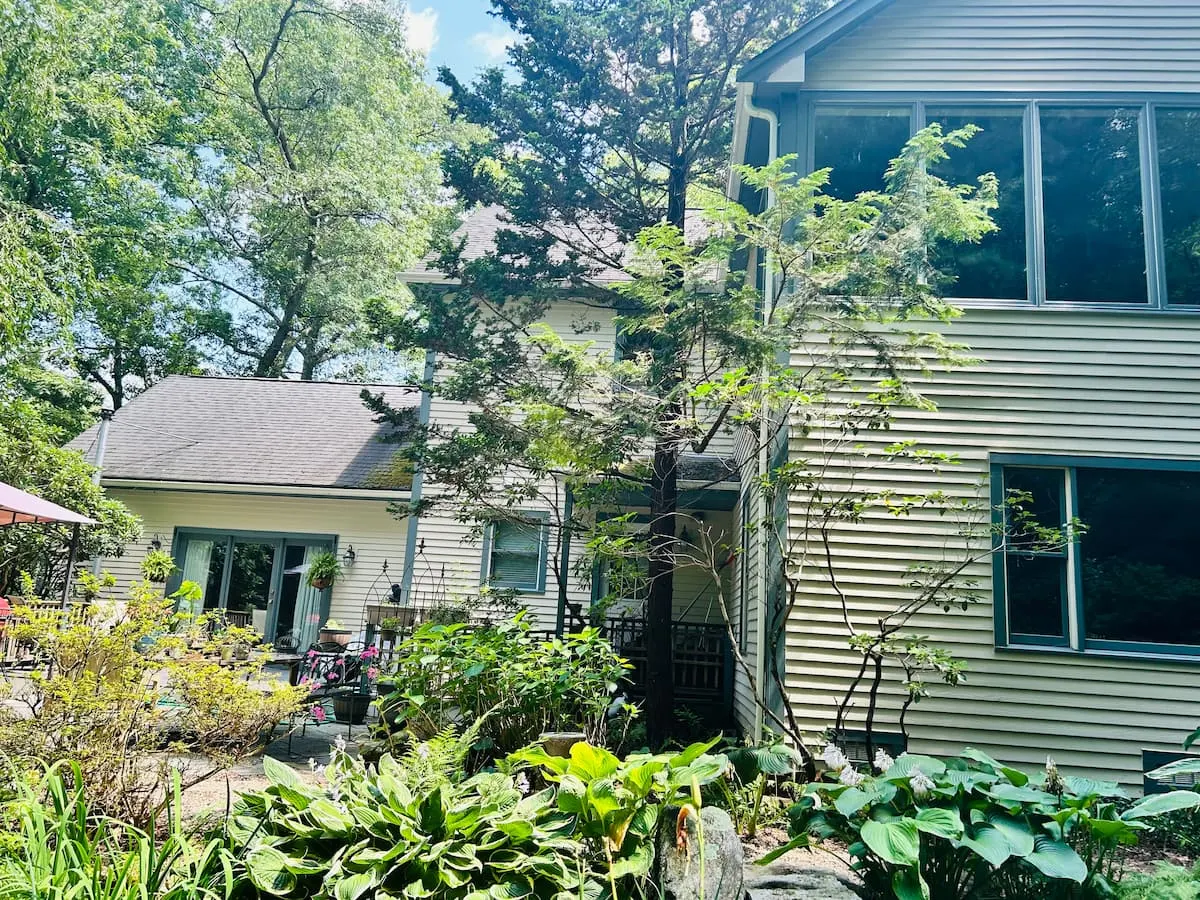
The Southborough house manual states the handful of rules that matter and gives the reason for each. The home has a septic system. The street is quiet, with close neighbours. The pinball machines are collector items. A rule with its reason attached reads as care for the house and for the people around it. A rule without one reads as suspicion.
Workplaces run on the same principle. Policies that people understand get followed, and policies that feel arbitrary get worked around.
Not over-policing also means trusting guests once they are in. I do not send mid-stay reminders about rules nobody has broken. Checkout stays short: the manual introduces it with "No complicated chore list, just a few small steps before you head home." More on that in no surprise charges.
Privacy: while they are there, the house is theirs
What Airbnb's policy says now
I checked Airbnb's Help Center in September 2026. The current policy, Restrictions on security cameras and other devices in homes, took effect on April 30, 2024. In short:
- No indoor cameras or recording devices. Hosts may not have devices that monitor indoor spaces, "even if these devices are turned off." Hallways, living rooms and guest houses are named, along with the common areas of private-room listings. Airbnb's definition covers any device that records or transmits video, images or audio, and it gives a baby monitor as an example.
- Hidden cameras "have always been prohibited and will continue to be prohibited."
- Outdoor cameras are allowed when disclosed. The location has to appear in the listing (Airbnb's examples include "I have a camera in my front yard" and a doorbell camera). They may not cover outdoor spots where people expect more privacy, such as an enclosed outdoor shower or a sauna.
- Noise decibel monitors are allowed indoors when disclosed, but not in bedrooms, bathrooms or sleeping areas. Airbnb describes them as devices that assess sound levels and duration and do not record audio.
- Smart home devices such as Alexa or Nest are allowed. Airbnb encourages hosts to disclose them and to let guests unplug or disable them.
This was a real change. When Airbnb announced it on March 11, 2024, it explained that indoor cameras in common areas had been permitted if disclosed and visible, and that from then on they would not be allowed "regardless of their location, purpose or prior disclosure." If your setup dates from before that spring, it is worth a fresh look.
Rules change, so read the policy itself before relying on my summary. Vrbo and other channels publish their own policies, and laws on recording differ between states and provinces. I am not a lawyer. If you are unsure, ask one.
What I do beyond the policy
Platform rules are the floor. Guests feel privacy in smaller ways.
- Hunt for forgotten devices. A house that was a family home for decades collects gadgets: an old baby monitor in a closet, a smart speaker in the den, a camera someone set up to watch the dog. Walk every room and remove or unplug anything that can see or hear.
- Disclose twice. Any outdoor camera goes in the listing, as required, and again in the manual, with what it covers and why.
- Never mention what the doorbell saw. "Looks like you got in late!" sounds friendly to the host and like surveillance to the guest. Unless there is a safety problem, that footage stays unwatched.
- Announce every visit. Landscapers and other vendors come between stays when possible. If someone must come during a stay, guests hear the day, the time window, and that the visit stays outdoors. Nobody enters an occupied home without the guest's agreement, short of an emergency.
- Protect their digital privacy. The Southborough projector runs in Roku's guest mode. Roku explains that guests sign in to their own streaming accounts and are automatically signed out on a date they choose, with the apps they added deleted. Nobody's Netflix login stays behind for the next family.
- One code per booking, so no earlier guest holds a working key.
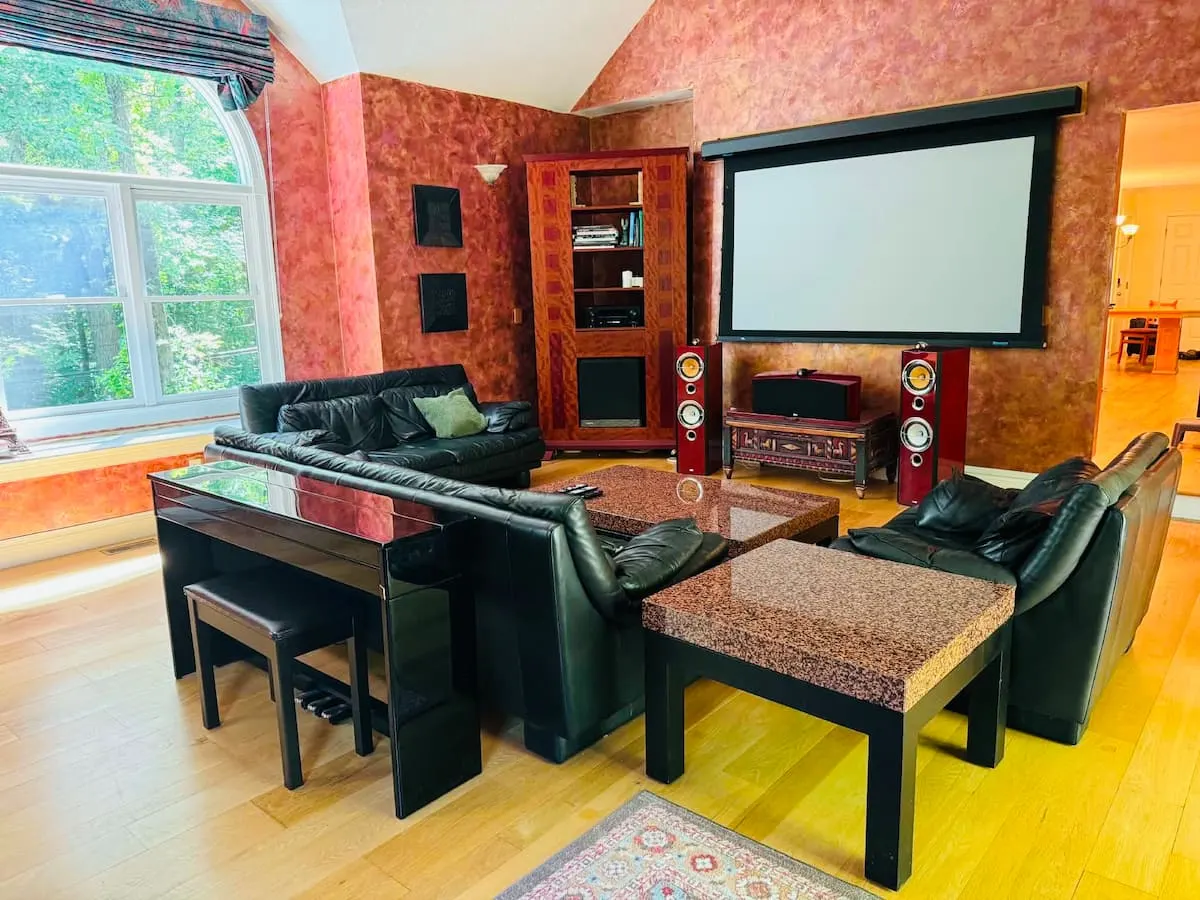
Privacy is a hospitality detail. Guests rarely praise it by name, and they always feel its absence.
Boundaries keep hosts kind
Answering within the hour does not mean agreeing to everything. A professional no is warm, brief and paired with an alternative: "I can't offer an 8 a.m. check-in because the team needs the morning to get the house ready, but you are welcome to drop bags at noon."
A few more that serve hosts well:
- Build a structured yes. The Southborough listing invites daytime events by arrangement (day retreats, showers, garden celebrations). "By arrangement" is a boundary dressed as a welcome. People ask before they plan, and everyone knows the terms.
- When a line is crossed, be calm and factual. Name the rule and its reason, say what needs to happen, and offer the way forward. Stay on the platform and let Airbnb support handle what needs escalating.
- Assume accidents. Most damage is a wine glass, not a crime. Thank the guest who tells you about it.
- Keep your private opinions private. What guests bring, cook, watch or celebrate in the house is their business, as long as the rules are respected.
HR left me with one last habit. Treat every message as if it could be read aloud later, in front of the guest, the owner and Airbnb. Professional writing passes that test without effort, and the kindest writing usually does too.
And when something in the house does go wrong, the same two skills apply. I cover that in service recovery.
Sources
- Airbnb Help Center: Restrictions on security cameras and other devices in homes (checked September 2026)
- Airbnb Newsroom: An update on our policy on security cameras, March 11, 2024
- Airbnb Help Center: Nondiscrimination Policy (last updated March 24, 2026)
- Roku Support: How to turn Guest Mode on and off on your Roku streaming device

Want this done for your home?
Everything in this article is part of what Jillian does for the homes she hosts. Tell her about yours and she will tell you, honestly, what she would do with it.